
A Fellow Worker’s Recognition
The AxBurke’s encounters with unemployed rivals briefly create the solidarity he has denied himself, making his violence harder to sustain emotionally.
increasing Bearing strength in each event
 decreasing
Bearing strength in each eventdecreasingThe Names in the Files
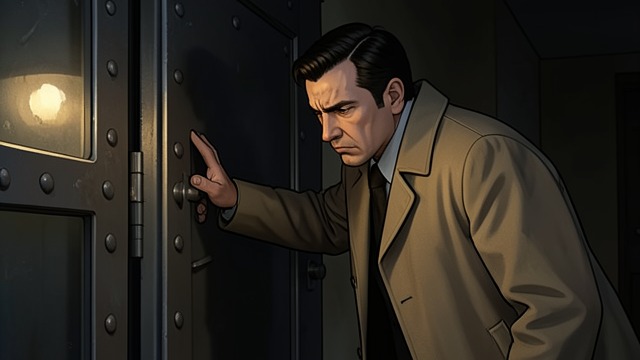
The Names in the Files
Rivals With Histories
Burke reads the résumés of people who have worked in similar paper-industry roles. Their descriptions reveal families, military service, long employment, and ambitions familiar to him.
Distance as Protection
Burke tells himself not to know his targets. The rule is an attempt to preserve the emotional distance necessary to act against people whose lives resemble his own.
A Kind Diner Counterman
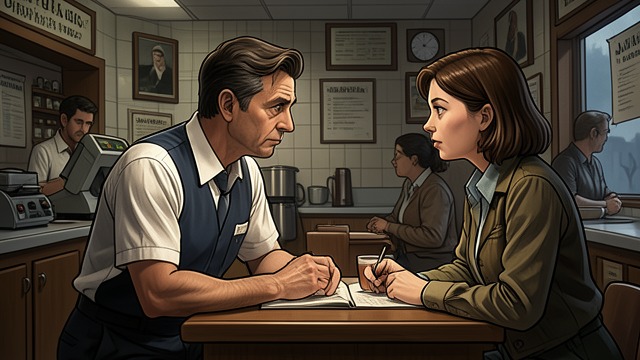
A Kind Diner Counterman
A Human Conversation
Burke finds Dynes working at SnowBird and speaks with him as a customer. Dynes notices Burke’s joblessness and offers sympathy grounded in his own experience of being laid off.
Distance Fails
Their conversation becomes friendly, and Burke recognizes shared anger at corporate downsizing. The encounter makes the planned killing emotionally harder without changing his determination to carry it out.
The Dead Man’s Echo
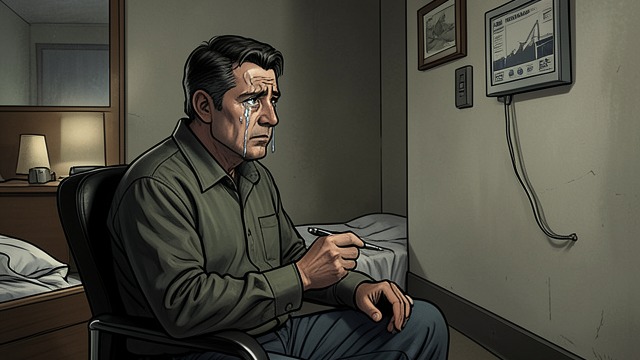
The Dead Man’s Echo
Grief After the Attack
Burke returns to Dawson’s Motel crying and replays the violent encounter. He regrets killing a man who seemed capable of being an ally against the conditions both faced.
A Temporary Moral Reversal
The thought that they should have stood together instead of fighting over scraps leads Burke to write his confession. The bond he glimpsed with Dynes briefly breaks through his story of necessity.
Fallon’s Advice
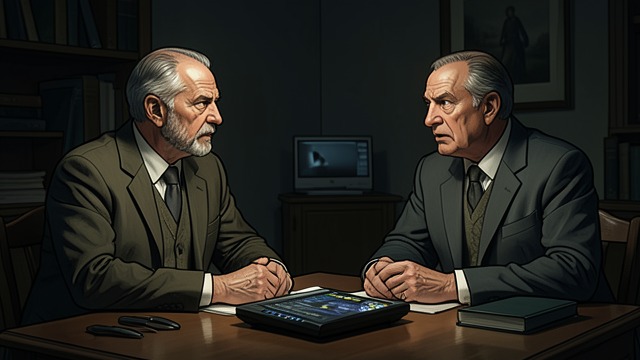
Fallon’s Advice
Shared Work Language
Burke and Fallon talk about machines, production lines, and the owners they resent. Fallon treats Burke not as an enemy but as a struggling professional asking for help.
A Last Ordinary Connection
Burke enjoys the conversation and learns useful details about Fallon’s work. The exchange gives his final act an intimacy that cannot be reduced to the impersonal removal of a competitor.
Burke’s Private Regret
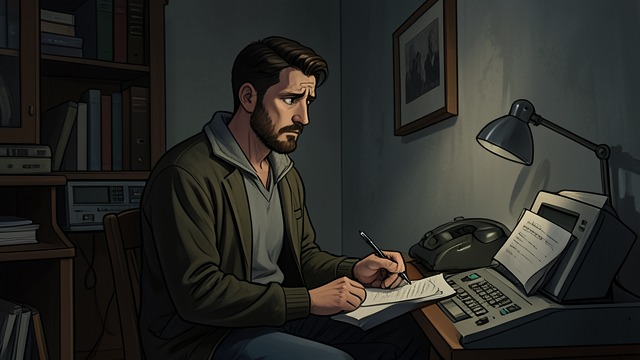
Burke’s Private Regret
A Friendship Imagined Too Late
Burke considers scenarios in which Fallon could live and still leave him the position. He briefly imagines retirement, partnership, or a new shift rather than murder.
The Choice Remains His
Those alternatives exist only in Burke’s imagination after he has killed Fallon. His grief exposes the human connection, but he does not surrender the belief that the job required the death.
Spring 1997
Late May 1997, in Lichgate
After Dynes’s death, late May 1997
Late June 1997, final night
After Fallon’s death, late June 1997
